


Are Permanent Holiday Lights Worth the Cost?
Last Updated: November 12, 2026
Quick Summary
Permanent holiday lights are a fixed, professionally installed LED system that stays on your home year-round and is controlled from a smartphone app, while traditional string lights are temporary strands you hang each winter and remove in January. The decision comes down to upfront cost versus long-term convenience, so permanent holiday lights suit homeowners who light their home every year and want to skip the ladder.
Permanent systems mount in aluminum channel along eaves, fascia, or soffit and stay installed all year.
Cost drivers include roofline footage, stories, component quality, smart features, and electrical work.
The controller is the most common failure point, so ask whether it is replaceable on its own.
A 150 W permanent system run 5 hours nightly for 60 days uses about 45 kWh.
Outdoor lighting circuits should have GFCI protection and every component should carry an outdoor rating.
Permanent lights or string lights for your home?
AF Lawn and Light designs and installs custom holiday lighting across the Kansas City metro.
Table of Contents
Permanent Holiday Lights vs Traditional String Lights: The Short Answer
Permanent holiday lights are a fixed, professionally installed lighting system that stays on your home year-round and can be programmed for any season or color scheme. Traditional string lights are the temporary strands you hang each winter and remove in January.
At AF Lawn and Light, we help Kansas City metro homeowners weigh both options.
Below, we break down the costs, lifespan, energy use, and safety realities so you can pick the right system for your roofline and your patience level.

What Are Permanent Christmas Lights, and How Do They Work?
Permanent Christmas lights are a track-mounted LED system that attaches to the eaves, fascia, or soffit of your home and stays installed all year.
The installation is the part most people underestimate. A professional installer mounts the channel along your roofline, routes low-voltage wiring back to a power source, and configures the controller.
That is the core appeal: no hanging, no clips, no untangling, no January takedown in freezing rain. The lights sit flush against the roofline and look like a clean architectural detail during the day rather than a bundle of wires.
For a deeper look at the specific systems and components available, our guide to permanent outdoor holiday lighting systems walks through the hardware options in detail.
Permanent Holiday Lights Cost: What Drives the Price Up or Down
Permanent holiday lights cost more upfront than a set of string lights, and that gap is the single biggest reason homeowners hesitate. What you pay depends on a handful of factors, and understanding them helps you compare quotes fairly.
The main cost drivers are:
Linear footage of roofline. More eaves, gables, and peaks mean more channel and more labor.
Number of stories. Second-story and steep-pitch installs require more equipment and time.
Channel and LED quality. Commercial-grade aluminum channel and weather-rated LEDs cost more than budget components, and they last far longer.
Controller and smart features. Color-changing capability and app control add to the system price.
Electrical work. Routing power to the controller may require an outlet or circuit work.
We do not publish flat pricing because every roofline is different, and a quote built on guesswork helps nobody. Pricing depends on your home's layout, the system you choose, and the access required. The honest way to compare is to get an on-site assessment and a written quote. You can request a holiday lighting quote and get a clear breakdown before you commit.
Traditional Christmas Lights Pros and Cons
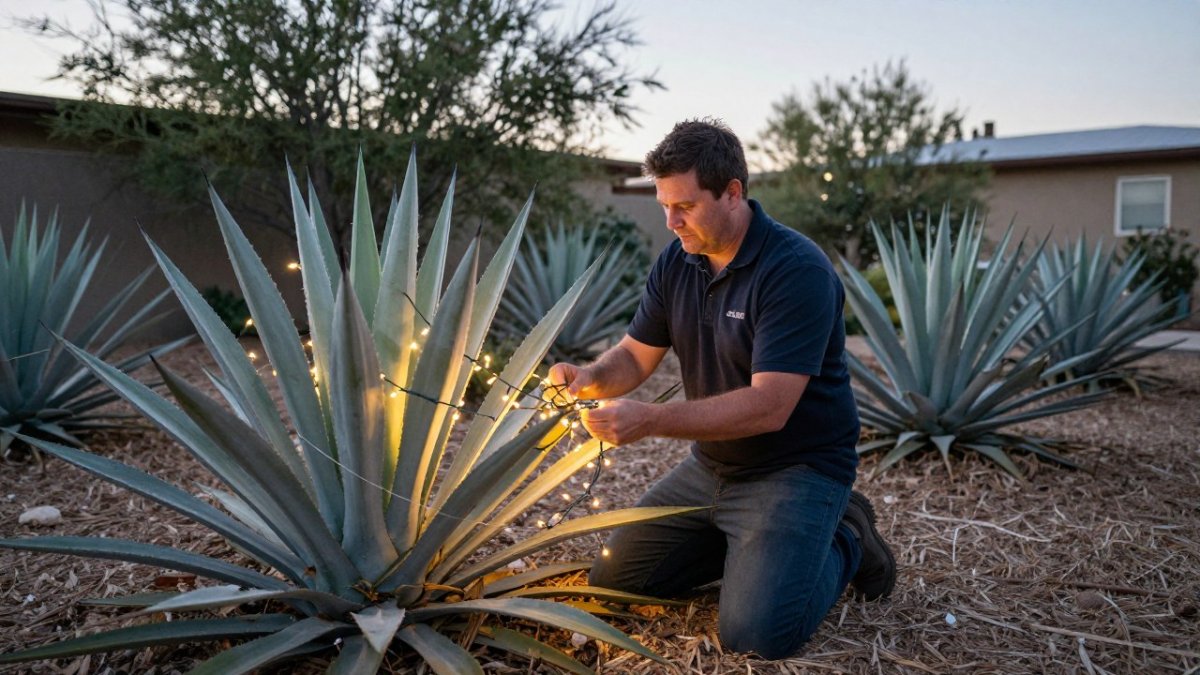
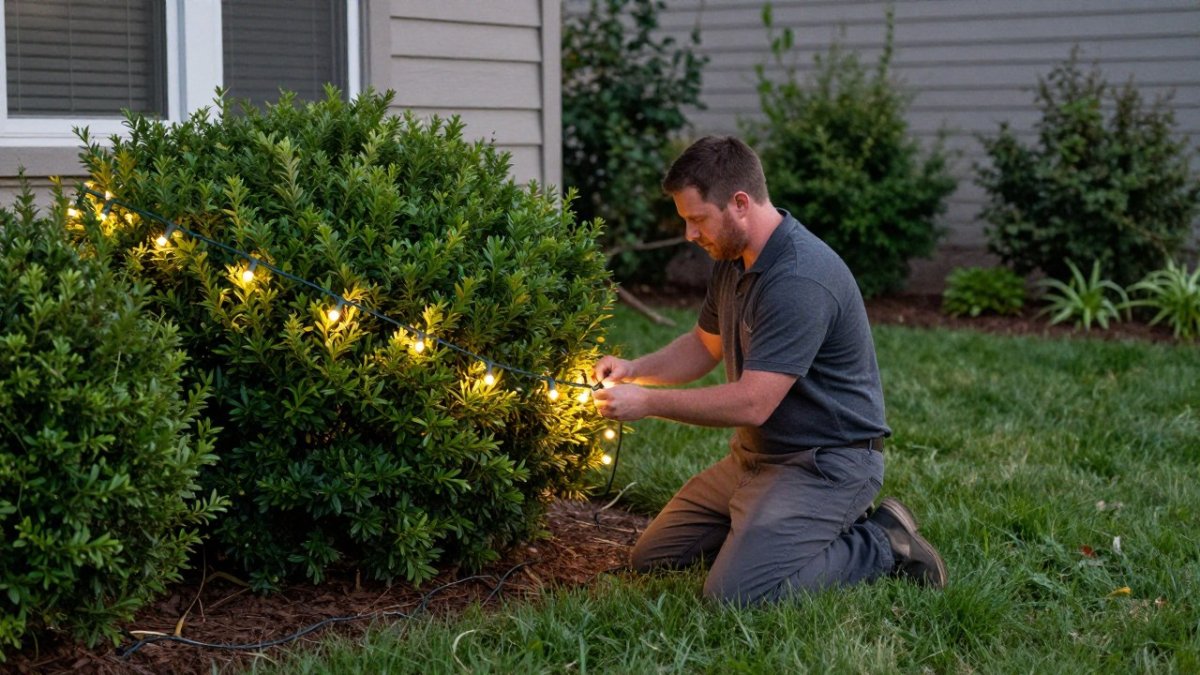
Traditional string lights are cheap to buy and easy to understand, which is exactly why they remain so common. A homeowner can pick up strands at any hardware store and have them up in an afternoon. The trade-offs show up later.
Pros:
Low upfront purchase cost
No permanent hardware on the house
Easy to swap styles or skip a year entirely
Widely available and simple to replace
Cons:
Annual hanging and takedown labor, often on a ladder in bad weather
Tangled, burned-out strands that need testing every season
Shorter lifespan; incandescent bulbs fail and LEDs degrade
Seasonal storage takes up garage space
Clips and fasteners can damage paint, gutters, or shingles if done carelessly
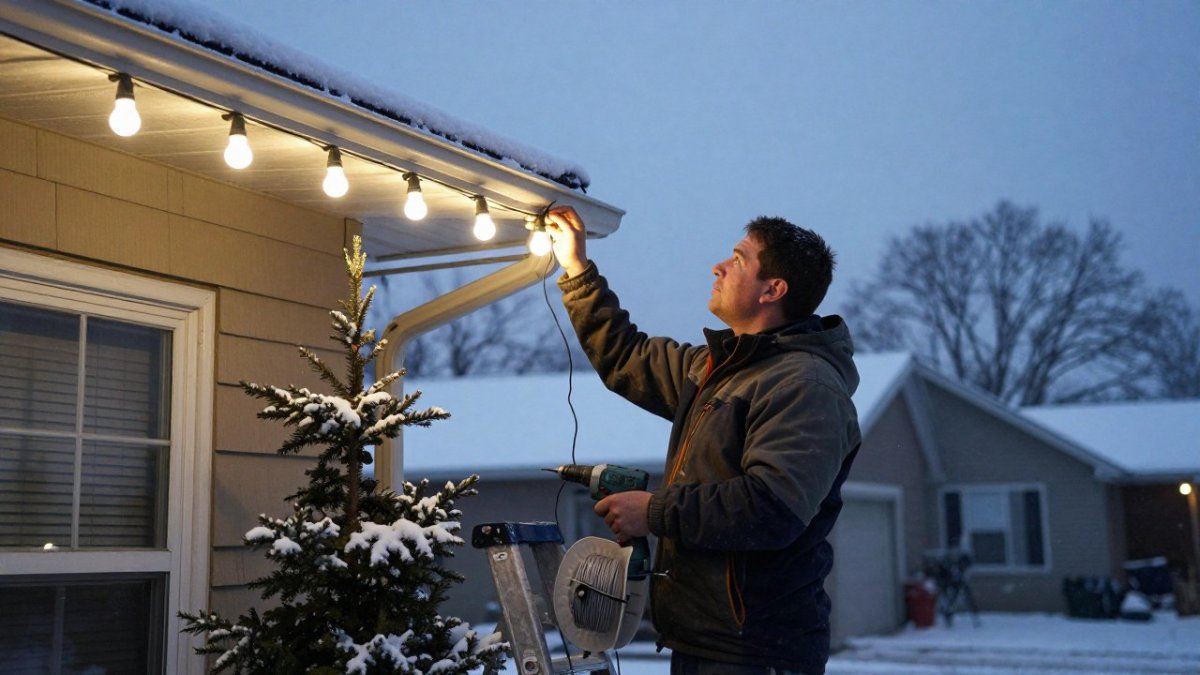
The labor is the hidden cost. What most guides miss is that the true expense of string lights is not the strands, it is your time and risk on a ladder twice a year. If you are leaning toward string lights, read our guide on how to hang roofline lights safely before you climb up.
Permanent Holiday Light Lifespan and What Replacement Really Looks Like
A permanent holiday light system is only as good as its weakest component, and the honest way to judge lifespan is to look at each part separately rather than trusting a single "hours" rating on the box.
Here is how the main components typically behave:
LED nodes. Quality nodes are rated for tens of thousands of hours, and because each node is individually addressable, a single failed node does not take down the run. On a serviceable system, a failed node is a small replacement, not a full rewire.
Controller. The controller is the most common failure point on any permanent system. It manages color, scheduling, and power distribution, and it is exposed to temperature swings and moisture. Ask whether the controller is replaceable on its own and whether it is mounted in a protected location.
Power supply. Low-voltage power supplies degrade over time, especially in hot attics or unventilated enclosures. A quality supply with proper ventilation outlasts a sealed bargain unit.
Channel and mounting. Aluminum channel holds up well; plastic channel and adhesive mounts are where sagging and detachment show up first, particularly in freeze-thaw climates.
Weather seals and connections. Every connection is a potential moisture entry point. Sealed, outdoor-rated connectors last far longer than exposed splices.
Warranty coverage is worth reviewing closely. Ask what a warranty covers, including the LEDs and the controller, the term in years, and any exclusions, and request the warranty document before you sign.
Repairability matters more than the warranty headline. A system you can repair is a system that lasts. Before you buy, ask three questions:
Can a single failed node be replaced without removing the entire channel run?
Is the controller a standard, replaceable part, or is it proprietary and discontinued after a few years?
Does the installer stock replacement components, or will a repair mean waiting weeks for a part?
A common pattern is that bargain systems fail at the controller first, and because the controller is proprietary, the whole display is stranded. Commercial-grade systems are built around replaceable components for exactly this reason.
What replacement actually looks like over time. Expect occasional node replacements in any system, a controller replacement at some point in the system's life, and channel or mounting repairs after severe weather. If you want to understand what year-round upkeep involves, our article on maintaining permanent outdoor lights all year covers the routine.
Energy Use, Electrical Safety, and Installation Realities
Energy use is one of the few places where the comparison can be made concrete, so it is worth doing the math instead of repeating that LEDs use less.
Here is a like-for-like example using common wattages and clearly stated assumptions. These are illustrative figures, not a quote for your home:
Setup | Approximate wattage | Hours per evening | kWh per season (60 days) |
Incandescent string lights, 5 strands | 250 W | 5 | About 75 kWh |
LED string lights, 5 strands | 25 W | 5 | About 7.5 kWh |
Permanent LED system, full roofline | 150 W | 5 | About 45 kWh |
Permanent LED system, scheduled 4 hours | 150 W | 4 | About 36 kWh |
Operating costs depend on your local electricity rate and how many hours your display runs.
Electrical safety deserves more attention than it usually gets. Three points matter most:
GFCI protection. Outdoor lighting circuits should be protected by a ground-fault circuit interrupter to reduce shock risk in wet conditions. This is standard practice for outdoor outlets, and a qualified installer will confirm the circuit is protected before tying in.
Outdoor ratings. Every component, controller, power supply, connections, should carry an outdoor rating and be sealed against moisture. Indoor-rated components in an outdoor enclosure are a common shortcut that fails in the first wet season.
Cable routing and strain. Low-voltage cable should be routed to avoid standing water, sharp roof edges, and places where snow and ice can pull on it. Poor routing is a frequent cause of connection failures.
The U.S. Consumer Product Safety Commission tracks holiday lighting hazards every season, and ladder falls and electrical issues are recurring causes of injury. Professional installation removes the ladder risk entirely and ensures the electrical work is done correctly.
If you are comparing energy use specifically, our breakdown of permanent holiday lighting energy efficiency benefits digs into the numbers.
Which Option Fits Your Home? A Decision Guide
The right choice depends on your home, your budget, and how much you value your weekends. Use this guide to decide:
Your Situation | Best Fit | Why |
You light your home every year and dread the ladder | Permanent lights | Install once, control from your phone |
You want color changes for holidays and events | Permanent lights | App-controlled color and effects |
You are budget-focused this season only | Traditional string lights | Lowest upfront spend |
You have a steep or second-story roofline | Permanent lights, pro install | Removes ladder risk |
You like changing styles and skipping years | Traditional string lights | No fixed hardware |
You want a clean daytime appearance | Permanent lights | Flush channel looks architectural |
Best for: homeowners who plan to light their home for years and want to eliminate annual labor. Skip if: you are lighting for a single season or prefer maximum flexibility with no permanent hardware.
Book Your Holiday Lighting Consultation
The choice between permanent holiday lights and traditional string lights is really a choice about how you want to spend your Decembers. Permanent systems trade a larger upfront investment for years of convenience and a safer roofline.
At AF Lawn and Light, we have spent over 20 years helping Kansas City homeowners light their homes safely and beautifully. Our team focuses on custom holiday lighting design and professional installation, with app-controlled options available for your display.
Get started with AF Lawn and Light and enjoy a holiday display that goes up without you ever touching a ladder.
Ready to stop wrestling with tangled strands and start enjoying your lights? Our team is booking consultations now for the season.
Frequently Asked Questions
What are the downsides of installing permanent Christmas lights?
The main downsides are the higher upfront cost compared with traditional string lights and the fact that the track or channel stays visible on your roofline all year. Permanent systems also require a professional installation to get the mounting and wiring right, so you cannot simply buy a box and clip them up yourself. Some homeowners also find that a single fixed color feels limiting, which is why color-changing options matter. Weigh those trade-offs against never hanging lights again before you decide.
How long do permanent holiday lights last?
Most permanent holiday light systems use commercial-grade LED components rated for tens of thousands of hours of use, and the mounting track is designed to stay up through heat, cold, rain, and snow. In practice, the LEDs often outlast the controller or power supply, which are the parts most likely to need replacement first. That is why repairability and warranty coverage matter as much as the bulb rating. Ask any installer how replacement parts are handled before you commit.
Are permanent holiday lights worth the investment?
They are worth it if you plan to light your home for several seasons and want to stop paying for annual hanging and removal. The permanent holiday lights cost is higher upfront, but it is a one-time installation rather than a recurring seasonal expense. If you only decorate for one December and do not mind the ladder work, traditional string lights may cost less overall. For households that decorate every year and want color-changing options, the math usually favors permanent.
Can permanent outdoor lights be used for holidays and other occasions?
Yes. Most permanent systems are programmable, so you can set warm white for Christmas, orange and purple for Halloween, team colors for game days, or soft white for everyday curb appeal. Scheduling through a mobile app means the display changes without anyone climbing a ladder. That year-round flexibility is one of the strongest arguments for permanent holiday lights over traditional string lights, which typically get packed away after the season.
Comments