


Professional Holiday Lighting Installation: A 2026 Guide
Last Updated: October 23, 2026
Quick Summary
Professional holiday lighting installation transforms your home into a festive display by handling design, installation, maintenance, and removal throughout the season. This service eliminates the safety risks and labor of DIY approaches while ensuring your property shines beautifully from setup through takedown.
Professional installers assess your home's architecture, electrical capacity, and landscaping before recommending light placement to prevent costly mistakes.
Ask providers whether they supply lights or require you to purchase them separately, as this affects total investment and replacement responsibility.
Verify insurance, workers' compensation coverage, and licensing before booking to protect yourself if accidents occur during installation.
Most providers offer three service models: full-service lease, installation-only, or hybrid arrangements with different ownership and maintenance terms.
Confirm mid-season response times, removal scheduling, and whether storage is available to keep your display maintained all season.
Table of Contents
What Professional Holiday Lighting Installation Involves
Holiday Lighting Design: Creating Custom Displays for Your Home
How Professional Christmas Light Installers Approach Your Project
Holiday Light Installation Safety: Why Professional Crews Matter
Verify insurance and licensing before you book
Roof-safety practices you can actually observe
Property protection and damage policies
Weather and scheduling contingencies
Christmas Light Installation and Removal: Full-Season Service
Service models: what's actually included
In-season maintenance and response times
Removal timing and scheduling
Storage and product care
Booking lead times and guarantees
Choosing the Right Holiday Lighting Service for Your Needs
Conclusion
Frequently Asked Questions
What Professional Holiday Lighting Installation Involves
Professional holiday lighting installation transforms your home or business into a festive display without the risk, labor, and complexity of doing it yourself.
A complete professional holiday lighting installation includes design consultation, light selection, installation on rooflines and landscape features, electrical setup, and seasonal maintenance. The scope depends on your property size, design preferences, and the complexity of custom displays you want to create.
Most homeowners underestimate how much planning goes into a polished result. Professional installers assess your home's architecture, existing landscaping, and electrical capacity before recommending light placement and quantities.
Pro Tip Before hiring any professional holiday lighting service, ask whether they provide their own lights or require you to purchase them separately. This affects your total investment and who handles replacement if bulbs fail.
Holiday Lighting Design: Creating Custom Displays for Your Home
The design phase is where professional holiday lighting installation becomes an art.
Custom lighting design considers sight lines from the street, color coordination with existing landscaping, and the overall visual balance of your property.
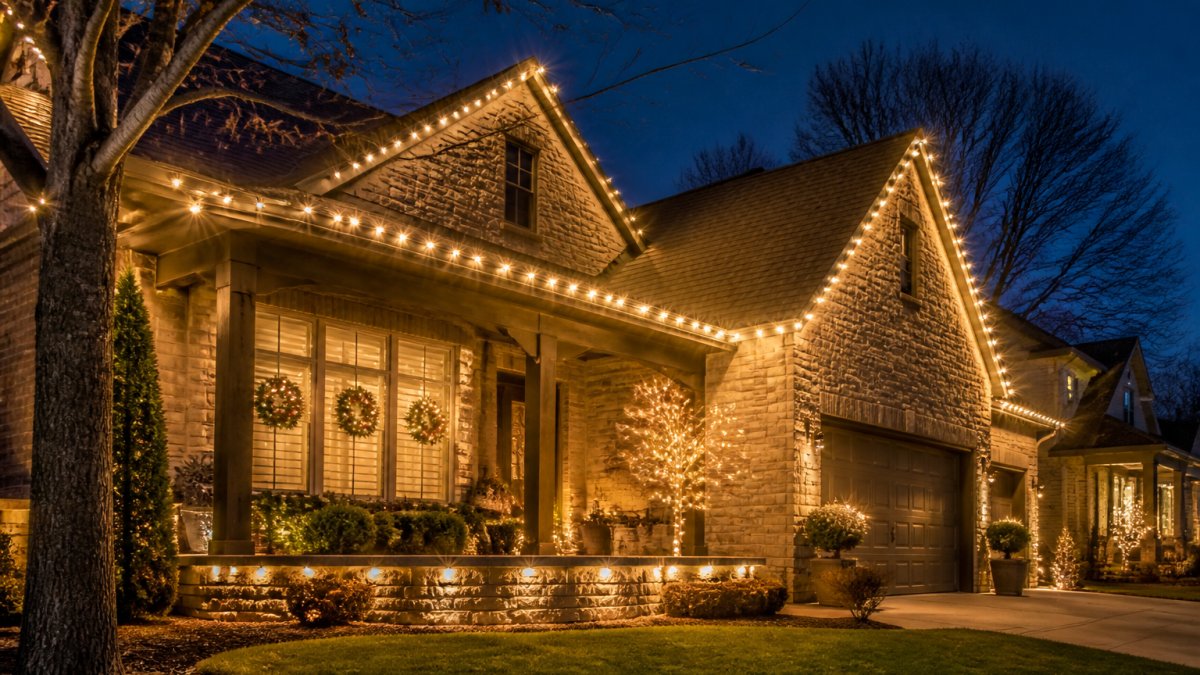
Common design approaches include outlining your home's roofline with warm white lights, adding accent lighting to trees and shrubs, and creating focal points with special displays or color combinations.
Many property owners want programmable displays that change colors or patterns. These advanced options require professional installation to ensure proper wiring and control systems.
Key Takeaway The most striking holiday displays balance simplicity with intentionality, they highlight key architectural features rather than covering every inch with lights.
How Professional Christmas Light Installers Approach Your Project
Professional Christmas light installers follow a systematic process to ensure safety, quality, and customer satisfaction.

The typical installation process starts with a site assessment where technicians evaluate roof pitch, gutter conditions, tree locations, and electrical access points.
Installation itself requires proper equipment, including extension ladders, roof anchors, and safety harnesses for work at heights.
The installation crew typically works in stages: securing lights along rooflines and architectural features first, then adding landscape lighting to trees and shrubs, and finally connecting all electrical components.
Watch Out Never attempt roofline lighting installation yourself. Falls from heights are among the leading causes of serious home injuries. Professional installers carry insurance and use proper safety equipment for this reason.
Holiday Light Installation Safety: Why Professional Crews Matter
Safety is the primary reason to hire professional holiday lighting installation services rather than tackling it yourself. Working at heights, handling electrical connections, and managing heavy materials all carry real risks that trained crews are equipped to mitigate. But "we're insured" is a claim, not proof, and the safety gap between a careful provider and a careless one shows up in the details you can verify before anyone climbs a ladder.
Verify insurance and licensing before you book
Ask every provider for a certificate of insurance and confirm three things: general liability coverage, workers' compensation coverage, and that the policy is current. General liability protects your property if a crew damages roofing, gutters, siding, or landscaping. Workers' compensation matters just as much, if an uninsured worker is injured on your property, the financial exposure can land on you as the homeowner. A legitimate provider will email the certificate without hesitation; reluctance is a red flag.
Licensing requirements for home-service contractors vary by state and municipality, so ask what credentials the company holds and confirm them with your local licensing authority. A provider that operates openly and can name its licensing body is easier to trust than one that waves the question away.
Roof-safety practices you can actually observe
Professional installers use fall-protection systems appropriate to the roof pitch and material, harnesses anchored to rated points, stable ladder placement with proper angle and footing, and roof-safe walkway practices that avoid damaging shingles.
Electrical safety is the other half. Crews should understand circuit load capacity, proper grounding, and weather-rated connections, and they should flag aging wiring or overloaded circuits before adding a display. Outdoor-rated cords, GFCI protection, and surge protection are baseline expectations, not upsells.
Property protection and damage policies
Ask what happens if a ladder scuffs siding, a clip pulls a gutter loose, or a bulb breaks a window. A written damage policy, who pays, how claims are handled, and how quickly repairs are scheduled, is a sign of a professional operation. Confirm whether the provider documents pre-existing damage with photos before installation; that protects both of you.
Weather and scheduling contingencies
Wind, ice, and temperature swings affect both installation safety and light durability. Ask how the provider handles weather delays, whether installation is rescheduled at no extra charge, and what response time they commit to if a storm damages your display mid-season. A clear weather policy separates a provider that plans for winter from one that hopes for the best.
A short verification checklist before you sign:
Certificate of insurance on file, current, with liability and workers' comp
Licensing confirmed with the local authority
Written damage and repair policy
Photo documentation of pre-existing conditions
Named fall-protection and electrical-safety practices
Weather-delay and mid-season response commitments
Christmas Light Installation and Removal: Full-Season Service
Professional holiday lighting installation includes more than just putting lights up. A complete service covers design, installation, in-season maintenance, removal after the holidays, and often off-season storage. The differences between providers show up in how those pieces are bundled, and in who owns the lights.
Service models: what's actually included
Providers generally fall into three models, and the model matters more than the marketing:
Full-service lease: The company supplies commercial-grade lights, installs them, maintains them, removes them, and stores them. You pay for the season's service, not the product. Replacements and warranty issues are the provider's problem.
Installation-only: You purchase your own lights; the provider installs, maintains, and removes them. You own the product and keep it year to year, but you're responsible for storage and for replacing failures outside the service window.
Hybrid: The provider supplies lights but you keep them after the season, or you buy through the provider at a discount. Terms vary widely, so get the ownership question answered in writing.
Ask each provider which model they use, whether lights are included, and what happens if a strand fails mid-season. The answers determine your total cost of ownership far more than the headline service description.
In-season maintenance and response times
Maintenance keeps a display from degrading as the season wears on. Technicians return to replace burned-out bulbs, reseat lights that have shifted in wind, and address weather-related issues. The variable to compare is response time: does the provider commit to a specific window for mid-season fixes, or do you wait until someone is in the neighborhood? Ask how requests are submitted and what turnaround is promised.
Removal timing and scheduling
Removal is the part many homeowners dread handling themselves. Professional takedown is careful and complete, lights come down, attachments are removed without damaging roofing or gutters, and the property is returned to normal. Timing matters: most crews schedule takedown in early January, and booking removal at the same time as installation locks in your slot before the calendar fills. Confirm the removal window in your agreement rather than assuming it happens promptly.
Storage and product care
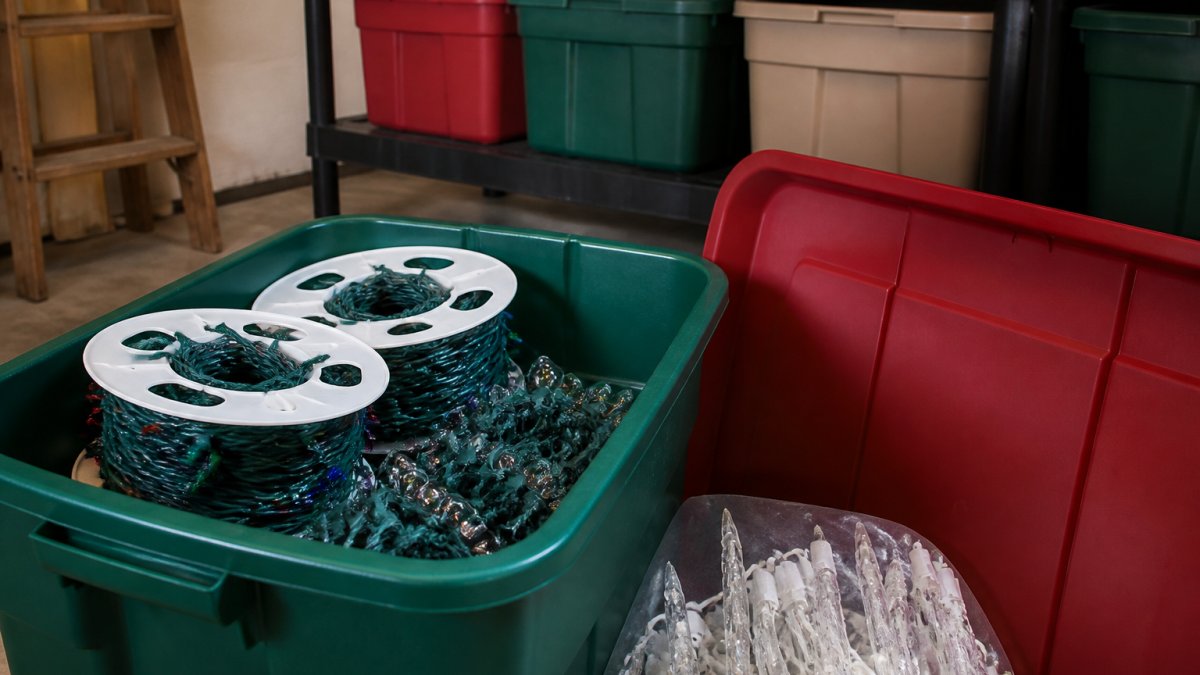
Off-season storage protects both the lights and your investment. Providers that store displays typically inspect, clean, and repair strands before the next season, which is why leased displays often look sharper year after year. If you own your lights, ask whether storage is available as an add-on and how strands are organized to prevent tangling and connector damage.
Pro Tip Ask your professional holiday lighting service whether they offer storage for your lights during off-season months. This protects your investment and eliminates the need to find space in your home.
Booking lead times and guarantees
Holiday lighting calendars fill early, many providers book fall installation slots weeks or months in advance, and popular dates go first. Ask about booking lead times, whether a deposit is required to hold your slot, and what the cancellation policy is. Also ask what service guarantee backs the work: a provider that stands behind its installation will state in writing what it will fix and how quickly if something goes wrong.
A comparison checklist for full-season service:
Question | Why it matters |
Who supplies the lights? | Determines ownership, warranty, and replacement responsibility |
What's the mid-season response time? | Keeps the display looking maintained all season |
When is removal scheduled? | Prevents lights hanging into February |
Is storage included or an add-on? | Affects total cost and product longevity |
What's the booking lead time and deposit? | Secures your preferred installation window |
What does the service guarantee cover? | Defines recourse if something fails |
Choosing the Right Holiday Lighting Service for Your Needs
Not all professional holiday lighting installation services are equal.
Look for installers with experience in your area who understand local weather patterns and architectural styles.
Ask about the full scope of service each provider offers. Some companies handle design and installation but not removal. Others bundle everything into seasonal packages.
Customer reviews and references provide insight into reliability and quality. Ask whether the company shows up when promised, handles complications professionally, and stands behind their work.
Consider whether you want the service provider to supply lights or whether you prefer to purchase them yourself.
Service Element | What to Ask | Why It Matters |
Design Consultation | Do they offer free design review? | Ensures your vision aligns with their capabilities before installation |
Light Quality | Commercial-grade or residential? | Commercial lights last longer and perform better in weather |
Installation Timeline | How long does typical installation take? | Helps you plan around the project and understand crew size |
In-Season Service | Do they handle mid-season maintenance? | Keeps display looking perfect if bulbs burn out or lights shift |
Removal & Storage | When do they remove lights? Is storage available? | Prevents lights from hanging into January and protects your investment |
Insurance & Licensing | Are they insured? Licensed? | Protects you if accidents occur during installation |
Conclusion
Professional holiday lighting installation transforms your home into a festive showcase while eliminating the hazards and labor of DIY approaches. From custom design through seasonal maintenance and removal, professional crews handle every detail so you can enjoy the holidays without worry. AF Lawn and Light brings over 20 years of experience serving property owners in the Kansas City metro area, delivering professional holiday lighting installation that combines beautiful design with expert safety practices.
Frequently Asked Questions
What does professional holiday lighting installation include?
Professional holiday lighting installation typically covers design consultation, installation of lights on rooflines, trees, and landscape features, and setup of electrical connections. Most experienced installers handle all aspects of transforming your outdoor space into a holiday display. Many also offer maintenance throughout the season and removal services after the holidays. The exact scope depends on your project size and the service provider you choose.
How far in advance should I book professional Christmas light installers?
Booking 4-8 weeks before your desired installation date is recommended, especially during peak season. Professional installers often fill their schedules quickly from September through November. Early booking ensures your preferred dates are available and gives the design team time to plan a custom display that matches your vision. Last-minute bookings may still be possible depending on installer availability.
Can professional installers use my existing holiday lights?
Many professional installers will work with your existing lights if they're in good condition and meet safety standards. However, most prefer to use their own commercial-grade lighting to guarantee quality, durability, and consistent appearance. Using professional-grade lights often means brighter, longer-lasting displays and reduced maintenance needs. Discuss your preferences with potential installers during the consultation.
What should I look for when choosing a holiday lighting installer?
Look for installers with proven experience, proper licensing and insurance, and strong customer reviews. Ask about their safety practices, warranty on installation work, and whether removal and storage are included. Verify they offer design consultation and can handle your project size. A reputable installer should provide clear communication about timeline, weather contingencies, and what happens if you need adjustments during the season.
Book Today
Add aflawnandlight.com as a preferred source on Google →

Comments