


Permanent Outdoor Holiday Lighting Systems: A 2026 Review
Table of Contents
What Makes Permanent Outdoor Holiday Lighting Different
Key Features to Evaluate in Permanent Outdoor Holiday Lighting Systems
Brightness, Color Accuracy, and RGBIC Technology
Weatherproofing and IP Ratings for Year-Round Durability
Smart Home Integration and App Control
DIY vs Professional Permanent Holiday Lights: What's the Real Difference
Installation Complexity and Electrical Considerations
Hidden Costs of DIY Installation
Long-Term Maintenance and Repair Support
Professional Installation: True Cost Breakdown
When DIY Makes Sense
Understanding Permanent Christmas Light Installation Cost
Factors That Drive Installation Pricing
Removal and Off-Season Storage
Installation Process and What to Expect
Eave Mounting, Adhesive Backing, and Mounting Clips
Power Injection, Voltage Drop, and Electrical Load Planning
Customization, Scene Modes, and Automation
Warranty, Durability, and Long-Term Investment
Frequently Asked Questions
Last Updated: September 21, 2026
What Makes Permanent Outdoor Holiday Lighting Different
Permanent outdoor holiday lighting stays mounted year-round and activates on demand through smart controls, eliminating annual installation and removal cycles.
Permanent systems use RGBIC technology and IP68-rated components engineered to withstand temperature swings, UV exposure, and moisture, delivering consistent performance year after year.
Permanent systems eliminate annual installation and removal labor, integrating with your smart home ecosystem for app and voice control.
Key Features to Evaluate in Permanent Outdoor Holiday Lighting Systems
Brightness, Color Accuracy, and RGBIC Technology
RGBIC technology combines RGB color mixing with individual color-control pixels, enabling precise color saturation and custom scenes that standard single-color lights cannot match.
Evaluate brightness in the 400-800 lumen range for residential applications. Warm white (2700K) creates traditional holiday feel; cool white (5000K) produces modern appearance.
Higher pixel density enables smoother color transitions and sophisticated animations. Look for individual pixel control rather than segment-wide color changes.
Weatherproofing and IP Ratings for Year-Round Durability
IP68 waterproof rating is the industry standard, ensuring systems survive complete submersion and temperature extremes from summer heat above 95°F to winter lows below zero.
Verify connectors use silicone sealing and corrosion-resistant materials. UV-stabilized materials maintain appearance through years of outdoor exposure.
Low-voltage systems (12V or 24V) reduce shock risk and allow safer troubleshooting. Controllers should be rated for outdoor installation or housed in weatherproof enclosures.
Smart Home Integration and App Control
WiFi-enabled systems integrate with Alexa, Google Home, and Apple HomeKit for voice control and automation. Bluetooth systems require phone proximity.
Superior apps offer scene customization, timer scheduling, and automation triggers. Some systems program holiday-specific sequences that activate automatically.
DIY vs Professional Permanent Holiday Lights: What's the Real Difference
Installation Complexity and Electrical Considerations
Professional installation handles electrical load planning, voltage drop calculations, and circuit integration, details determining whether systems function reliably for years or fail within months.
HandyDadTV
Voltage drop dims lights at far ends of long runs. Professionals calculate proper wire gauge and power injection points; a 150-foot installation might require upgrading to 14-gauge wire ($200-$400) and 2-3 power injection nodes ($100-$200 each). DIY installers often skip these steps, resulting in noticeably dimmer lights.
A typical 50-foot RGBIC string draws 5-8 amps at full brightness. Professionals assess electrical capacity to prevent circuit overload; a 2,000-square-foot home with 200-amp service typically supports 40-50 amps.
DIY works for small systems (under 50 feet, single power source). Larger installations risk electrical hazards; improper grounding or oversized circuits can cause fires, and insurance may deny claims for unpermitted work.
Hidden Costs of DIY Installation
Tool costs total $200-$400 if rented or $500-$1,000 if purchased (ladder, voltage tester, crimpers, strippers).
Essential materials omitted from kits include weatherproof conduit ($100-$300), dielectric grease ($15-$25), mounting clips ($50-$150), and additional wire ($0.50-$1.50/foot), totaling $200-$500.
Dedicated circuits require licensed electricians ($500-$1,500) or risk code violations and voided insurance coverage.
DIY installation takes 20-40 hours over multiple weekends, equaling $500-$1,000 in labor value at $25/hour; mistakes double this cost.
DIY troubleshooting takes weeks versus hours for professionals. Hiring a professional to fix DIY mistakes means paying for installation twice.
Long-Term Maintenance and Repair Support
Professional installers provide ongoing support; service calls cost $75-$150 for diagnosis and $100-$300 for repairs.
DIY systems leave you responsible for diagnosis and repair. If lights stop working, you're researching online forums, ordering replacement parts, and attempting repairs yourself. This process takes weeks. Professional support resolves issues in days. Over a 10-year system lifespan, you'll likely need 2-4 service calls for component failures or connectivity issues. Professional systems with maintenance contracts ($150-$300 annually) reduce emergency repairs by preventing corrosion and catching failures early.
Warranty coverage differs significantly. Professional installations often include multi-year warranties on labor and parts, typically 2-3 years on labor and 5+ years on components. If your controller fails in year 3, the professional replaces it at no cost. DIY purchases include manufacturer warranties only (usually 1-2 years), which rarely cover installation-related failures. If your voltage drop causes diodes to overheat and fail, the manufacturer warranty won't cover it because the failure resulted from improper installation.
Professional Installation: True Cost Breakdown
A typical professional installation for a 2,000-square-foot home with standard eave mounting costs $2,500-$5,000. This breaks down as:
Materials (lights, controller, wire, connectors, mounting hardware): $800-$1,500
Labor (site assessment, design, mounting, electrical integration, testing): $1,200-$2,500
Overhead and profit margin: $500-$1,000
This seems expensive compared to a $500-$800 DIY kit, but the professional price includes engineering, warranty, and support. If you add the true cost of DIY (tools, materials, labor time, and eventual professional repairs), the total often reaches $1,500-$3,000, narrowing the gap significantly.
When DIY Makes Sense
DIY is viable if you meet these criteria:
System size is small (under 75 feet of lights, single power source)
Installation is simple (flat eaves, easy electrical access, no voltage drop concerns)
You have relevant skills (electrical knowledge, comfort with low-voltage systems, ladder safety experience)
You have time (willing to spend 20+ hours over several weekends)
You're comfortable troubleshooting (willing to diagnose and repair issues yourself)
If any of these don't apply, professional installation delivers better value. The peace of mind, warranty coverage, and long-term support justify the higher upfront cost for most homeowners.
Understanding Permanent Christmas Light Installation Cost
Factors That Drive Installation Pricing
Installation cost depends on several variables that professionals assess during site evaluation. Linear footage of your home's perimeter is the primary factor. A 2,000-square-foot ranch home with simple eave mounting costs less than a 4,000-square-foot two-story with complex rooflines.
Mounting complexity increases cost substantially. Simple adhesive backing on flat surfaces is straightforward. Mounting clips on gutters, eave brackets on varied angles, or architectural lighting integrated into landscape features require more labor and expertise. Roof-mounted systems demand additional safety precautions and equipment.
Color and control complexity matters too. Single-color white lights cost less than RGBIC systems. Basic on/off control is simpler than smart home integration. Professional-grade controller units and custom programming add to the investment.
Electrical integration affects pricing. If your home's electrical panel is far from your desired light locations, running proper low-voltage lines costs more. Adding dedicated circuits or power injection points increases labor time.
Removal and Off-Season Storage
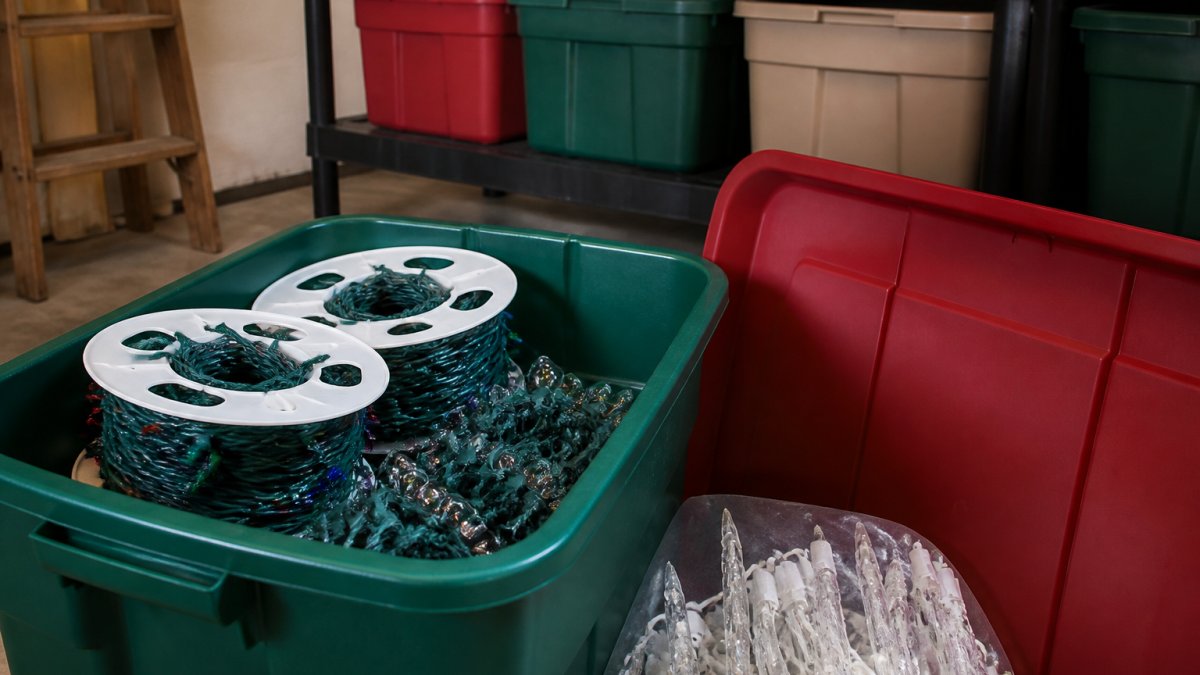
Unlike temporary lights, permanent systems don't require removal. They stay mounted and inactive during off-season months. This eliminates January takedown labor entirely, a significant hidden benefit most people overlook.
Seasonal storage simply means powering down your system. No boxes to store, no cords to untangle next year. Your lights remain protected by weatherproof housings.
However, professional maintenance during off-season extends system lifespan. Annual inspections catch minor issues before they become problems. Cleaning accumulated debris from connections and housings prevents corrosion.
Installation Process and What to Expect

Professional installation follows a structured process.
Eave Mounting, Adhesive Backing, and Mounting Clips
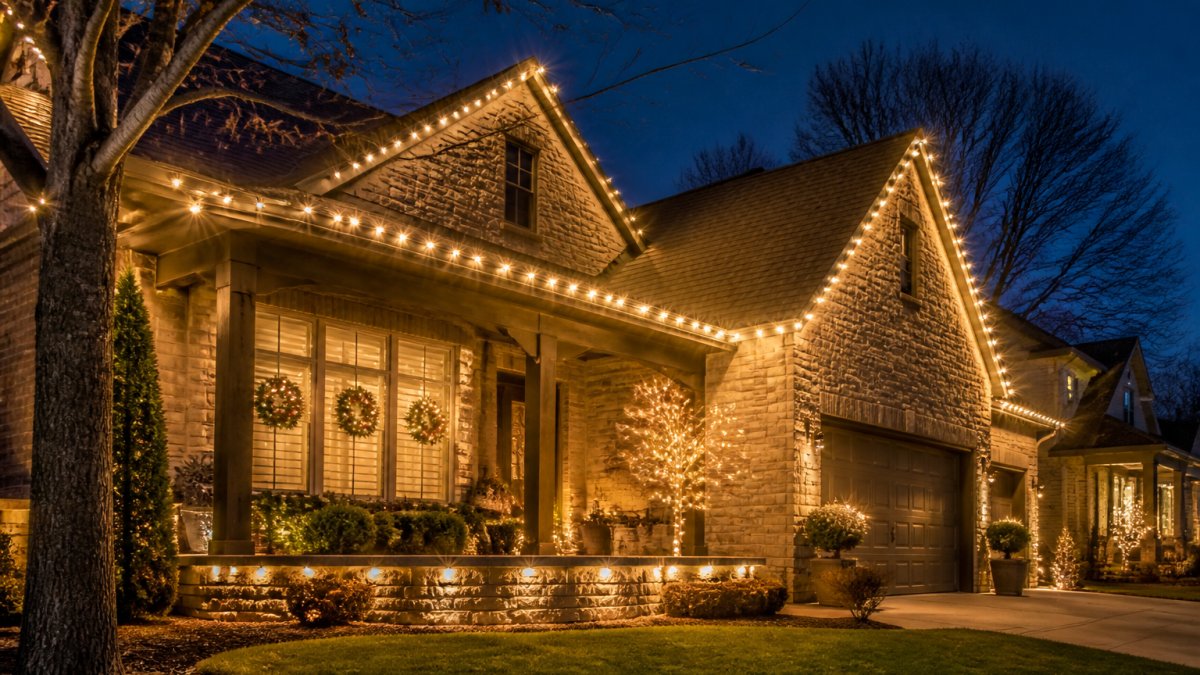
Eave mounting is the most common installation method for residential homes. Mounting clips attach to gutters or eave fascia, holding light strings securely. Quality clips distribute weight evenly and won't damage your home's structure.
Power Injection, Voltage Drop, and Electrical Load Planning
Power injection maintains brightness across long light runs. Instead of powering your entire display from a single point, technicians add power injection nodes at strategic intervals. This replenishes voltage, preventing the dimming that occurs over long distances.
Customization, Scene Modes, and Automation
Modern permanent systems offer remarkable customization. Scene modes let you save specific color combinations and animation sequences. You might have a "Classic Red and Green" scene for traditional holidays, a "Cool Blue and White" scene for winter elegance, and a "Rainbow Celebration" scene for special occasions.
Warranty, Durability, and Long-Term Investment
Quality permanent systems carry multi-year warranties covering both components and labor. Look for systems with 5+ year component warranties and 2-3 year labor warranties. These terms reflect manufacturer confidence in durability.
Consideration | Temporary Lights | Permanent Systems |
Annual setup labor | Required | None |
Annual removal labor | Required | None |
Seasonal storage | Required | Not needed |
Durability | 2-3 seasons | 10+ years |
Customization | Limited | Extensive |
Smart home integration | Not available | Available |
Weather resilience | Poor | Excellent |
Frequently Asked Questions
Is permanent outdoor holiday lighting worth the investment?
Permanent outdoor holiday lighting eliminates the annual setup and takedown labor that costs time and effort each season. Systems with smart home integration and programmable scene modes let you automate holiday displays without manual effort. The upfront cost is higher than temporary lights, but over 5-10 years, many homeowners find the convenience and durability justify the expense. Professional installation ensures proper electrical load planning and voltage drop management, reducing long-term failure risk.
What's the cost difference between DIY and professional permanent holiday lights installation?
DIY permanent holiday light installation requires you to handle eave mounting, power injection planning, and electrical circuit integration yourself, which demands technical skill and carries safety risks. Professional installation includes site assessment, voltage drop calculations, weatherproofing verification, and warranty support. Pricing depends on your home's size, roof complexity, and the system's feature set. For an accurate quote on permanent christmas light installation cost specific to your property, contact AF Lawn and Light for a customized assessment.
What smart outdoor lighting app features should I look for?
Key smart outdoor lighting app features include voice control integration, scene mode scheduling (holiday-specific patterns), timer automation, and color temperature adjustment. RGBIC technology enables pixel-level color customization across your display. Reliable connectivity protocols ensure the system responds quickly to commands. Firmware update capability keeps your system current with new features. Look for apps that let you create custom scenes for different holidays and save recurring automation schedules.
Do permanent holiday lights require professional installation?
Permanent outdoor holiday lighting systems can be installed as DIY projects if you have electrical knowledge and comfort working at heights. However, professional installation handles critical elements like electrical load planning, voltage drop management, and proper weatherproofing with IP68 ratings. Professionals ensure mounting clips and adhesive backing are applied correctly for durability. They also manage power injection points and circuit breaker integration safely. For most homeowners, professional installation reduces risk and ensures long-term reliability.
Book Today
Comments