


7 Best Holiday Lighting Design Ideas for Homes in 2026
Table of Contents
Roofline Outlining and Architectural Accents
Choosing Commercial-Grade LED String Lights for Eaves
Landscape and Tree Lighting Techniques for Curb Appeal
Sizing the Load Before You Light the Yard
Smart Control for Landscape Zones
Pathway and Driveway Illumination
Window, Eave, and Railing Decor with Icicle and Fairy Lights
Getting the Drop Length and Spacing Right
Smart Control for Windows, Eaves, and Railings
Storage That Protects the Investment
Permanent Outdoor Holiday Lighting Systems Review
Professional Holiday Lighting Installation Cost and What Affects It
Best Practices for Outdoor Holiday Light Safety
Smart Home Integration, Storage, and Year-Round Backyard Lighting
Conclusion: Bringing Your Holiday Lighting Ideas to Life
Frequently Asked Questions
Last Updated: September 28, 2026
Roofline Outlining and Architectural Accents
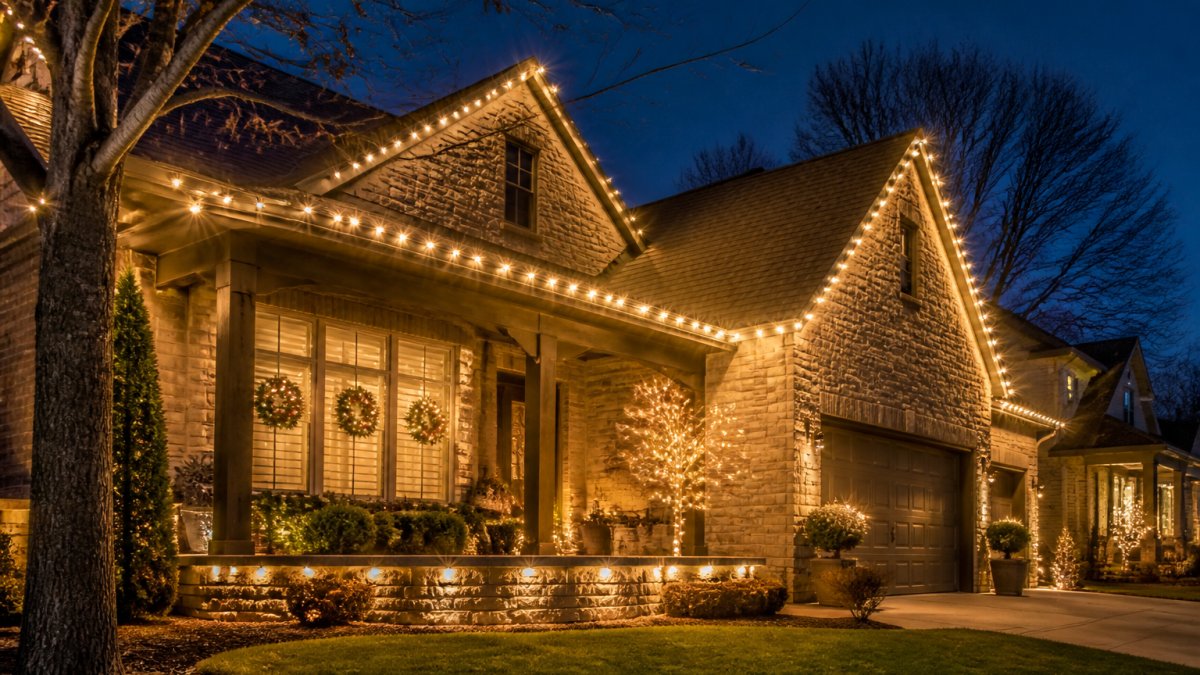
The fastest way to make a home look professionally decorated is to trace its roofline with warm white lights. Clean lines along the eaves, gables, and peaks draw the eye upward and define the house's shape.

A few rules we follow:
Keep spacing even along every straight run
Match bulb color temperature across the whole outline
Wrap peaks and gables in the same direction for a uniform glow
Pro Tip Run your roofline lights in one continuous circuit per side of the house. It cuts down on extension cords and makes troubleshooting a single strand instead of five.
Choosing Commercial-Grade LED String Lights for Eaves
Commercial-grade LED string lights cost more up front but last far longer than box-store strands, surviving winter after winter.
Look for these features:
Thicker wire that holds up in cold and wind
Sealed sockets that keep out rain and snow
Replaceable bulbs so one dead light doesn't kill the strand
Weather-resistant connectors rated for outdoor use
Landscape and Tree Lighting Techniques for Curb Appeal
Landscape lighting turns a house into a scene. Trees, shrubs, and pathways add depth so the display reads well from the street. The trick is layering: light the trunk, canopy, and ground separately to create the glow people notice from down the block.
Three techniques that work:
Wrap tree trunks for a clean, modern look
Drape canopies with net or string lights for a soft sparkle
Uplight shrubs from the base to highlight their shape
Sizing the Load Before You Light the Yard
Most homeowners underestimate how fast landscape lighting adds up. A 100-count incandescent strand draws roughly 40 watts; the same length in LED often draws under 5. Across a half-dozen trees, a wrapped trunk, and a pathway run, that's the difference between one 15-amp circuit and three.
A few rules of thumb that hold up in practice:
Add up the rated wattage printed on every strand before you plug anything in
Keep total load on a single outdoor circuit under 80% of the breaker rating, on a 15-amp, 120-volt circuit that's about 1,440 watts
Use a GFCI-protected outlet for every outdoor run, and never daisy-chain more strands than the manufacturer's box allows
Split long runs across two circuits rather than chaining extension cords end to end
Watch Out Extension cords are rated for length and gauge, not just plug shape. A 16-gauge cord loses voltage fast past 50 feet, which dims LEDs and overheats incandescent strands. Match cord gauge to run length before you bury anything under mulch.
Smart Control for Landscape Zones
Landscape lighting is the easiest part of a display to automate because the fixtures rarely move.
A practical setup looks like this:
Put trees and shrubs on one smart plug or controller channel, and pathways on a second
Schedule the landscape zone to come on at dusk and shut off at a set hour, so you're not running wattage all night
Use color-capable fixtures on the trees only, and keep pathways warm white, color-changing path lights read as gaudy from the street
Sync the landscape zone to the same app or voice assistant that runs your roofline, so the whole property changes scene with one command
Pathway and Driveway Illumination
Pathway illumination keeps guests safe, guides the eye to the front door, and makes your entry feel intentional.
Try these approaches:
Line walkways with short stakes or path lights spaced roughly 6 to 8 feet apart
Edge the driveway with low, warm-white fixtures
Add glow to steps and railings for safety
Window, Eave, and Railing Decor with Icicle and Fairy Lights
Icicle lights hang from eaves and windows to mimic frozen drips, while fairy lights add delicate sparkle to railings and trim. Together they soften the roofline's hard lines and add texture.
Where each works best:
Icicle lights: under eaves, along gutters, above windows
Fairy lights: railings, porch posts, window frames, small shrubs
Cluster lights: dense, bright spots where you want a focal point
Watch Out Never staple or nail light strands to your roof or siding. It cracks shingles, voids warranties, and can cut the wire, which is a real shock hazard.
Getting the Drop Length and Spacing Right
Icicle lights live or die on two numbers: drop length and strand spacing. Standard drops run 9, 12, 18, and 24 inches. On a single-story eave, 12- to 18-inch drops read as balanced; on a two-story roofline, 18- to 24-inch drops hold their shape from the street instead of disappearing.
A few mechanics that separate a clean install from a messy one:
Measure the eave run and buy strands in the longest length that divides evenly, splicing mid-run creates a visible dark spot
Overlap the end of one strand with the start of the next by one drop so the pattern stays continuous
Hang from the gutter lip or a shingle clip rather than the fascia, so water sheds past the wire
Keep the plug end on the same side of the house as your GFCI outlet to avoid a long, exposed extension cord
Smart Control for Windows, Eaves, and Railings
Icicle and fairy strands are the easiest part of a display to zone because they're already broken into short, independent runs.
A practical approach:
Put window frames on one smart plug channel and eave icicles on another, so you can run windows alone on weeknights and the full set on weekends
Use a smart plug with sunrise/sunset scheduling so the display turns on without a timer dial
If you want color, keep it to the fairy strands on railings and posts, color-changing icicles tend to look busy against a warm-white roofline
Group everything under one app scene ("Holiday," "Game Day," "Everyday") so a single tap changes the whole front of the house
Storage That Protects the Investment
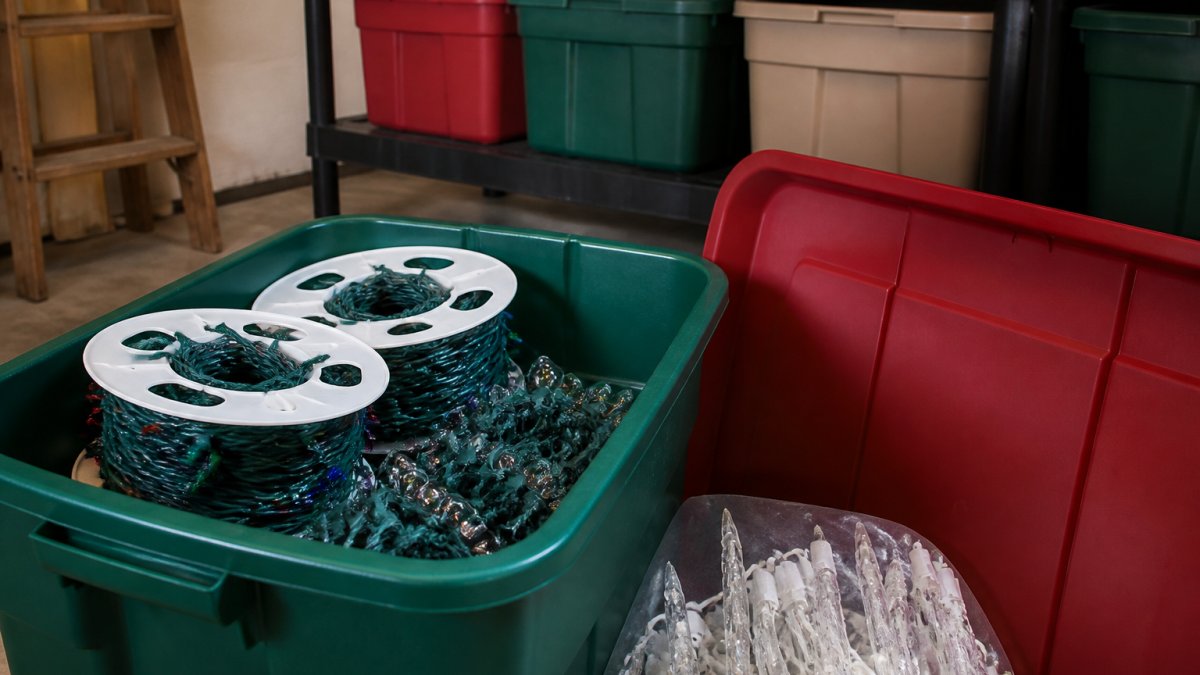
Wind each strand around a dedicated reel or a piece of cardboard cut to the drop length, so the drops don't knot
Label the reel with the location it came from, "front porch railing," "garage eave", so you're not guessing in November
Store in a cool, dry bin away from rodents, and skip the attic if it swings between freezing and hot
Test every strand before you pack it away, and again before you hang it
Pro Tip Snap a photo of each finished zone, windows, eaves, railings, before takedown. Next year, matching the strand to the location takes minutes instead of an afternoon.
LED icicle and fairy strands run cool, draw a fraction of incandescent wattage, and last for years. When an old incandescent strand dies, check your local recycling program before tossing it, many contain materials that shouldn't go in the trash.
Permanent Outdoor Holiday Lighting Systems Review
Permanent outdoor holiday lighting systems are fixtures installed once and left up year-round, controlled by app so the same lights work for holidays, game days, and everyday accent lighting.
What to look for:
Durable, weather-resistant housings built for year-round use
App or smart-home control with preset scenes
Warm white plus multicolor options in one fixture
A track or channel that hides wiring along the eave
Professional Holiday Lighting Installation Cost and What Affects It
What drives the cost:
Total linear feet of roofline and trim
Number of trees, shrubs, and pathways lit
Height and pitch of your roof
Whether you use permanent fixtures or seasonal strands
Whether takedown and storage are included
Key Takeaway The real cost question isn't "how much per strand." It's "what's included." Setup, maintenance, takedown, and storage change the total far more than bulb count.
For a quote on your specific home, reach out to AF Lawn and Light for current pricing.
Best Practices for Outdoor Holiday Light Safety
Best practices for outdoor holiday light safety come down to power, placement, and weather. Most accidents are preventable with a few simple habits.
Safety checklist:
Plug into a GFCI-protected outdoor outlet
Check every strand for cracked or frayed wire before hanging
Keep connections off the ground and out of standing water
Use clips rated for your surface, not nails or staples
Don't overload one circuit with too many strands
Turn lights off before storms and when you're away
Smart Home Integration, Storage, and Year-Round Backyard Lighting
Smart home integration lets you control your display from an app or voice assistant, set schedules, change colors, and sync lights to music without touching a switch.
Smart features worth having:
Timers and schedules so lights run only when you want
Scene presets for holidays, parties, and everyday evenings
Voice control through your existing smart-home system
Energy-efficient LEDs that sip power compared to old incandescent strands
Storage matters just as much. When the season ends:
Label each strand by location so next year's setup is fast
Coil lights loosely around a reel, never tight
Store in a cool, dry bin away from rodents
Test each strand before packing it away
Pro Tip Snap a photo of your finished display before takedown. Next year, you'll know exactly where every strand went, and setup takes half the time.
Conclusion: Bringing Your Holiday Lighting Ideas to Life
The gap between a good display and a great one isn't budget. It's planning, safety, and the right fixtures for each part of your home.
Frequently Asked Questions
What are the current trends for holiday lighting ideas in 2026?
Warm white LED string lights still dominate, but cluster lights and permanent outdoor systems are gaining ground. Homeowners want roofline outlining that stays up year-round, smart controls that change colors with an app, and landscape lighting that extends the display into trees and pathways. Multicolor options remain popular for families, while commercial-grade fixtures are replacing disposable strands because they last longer and handle winter weather better.
What are the benefits of permanent outdoor holiday lighting systems?
Permanent systems mount once and stay up, so you skip the ladder work, storage bins, and January takedown hassle. They use commercial-grade LEDs rated for years of use, integrate with smart home apps for scheduling and color changes, and can double as year-round backyard lighting for patios or pathways. The upfront investment is higher than temporary strands, but many homeowners find the safety and convenience worth it.
How do professional lighting installers design for rooflines and landscaping?
Installers start with a walkthrough to map your roofline, eaves, trees, and pathways. They measure linear feet, choose voltage and wattage to avoid overloading circuits, and use mounting clips that do not damage shingles or siding. For landscaping, they uplight trees and line pathways with weather-resistant fixtures. The goal is a balanced glow that highlights architecture without hot spots or dark gaps.
How much does professional holiday lighting installation cost?
Pricing depends on the size of your home, the number of trees and pathways you want lit, the type of lights you choose, and how long the display stays up. Permanent systems cost more upfront than seasonal strands but spread the cost over years of use. For an accurate quote, contact a local installer and ask for a walkthrough so they can measure your specific roofline and landscape.
Book Today
Comments